
Small Sample Size Play Action with Ben Johnson

Today we will take a look at some play action designs from Ben Johnson that did not make their way into the 514-page Bears Manual. These were called infrequently, but are worthy of discussion.
In my charting, I have the Bears calling PA Staff - Diagonal concept three times. This family of play calls has the ability to keep 7 in protection, typically off of a Duo play fake. This play is ideally called against a single high, cover 3 defense.
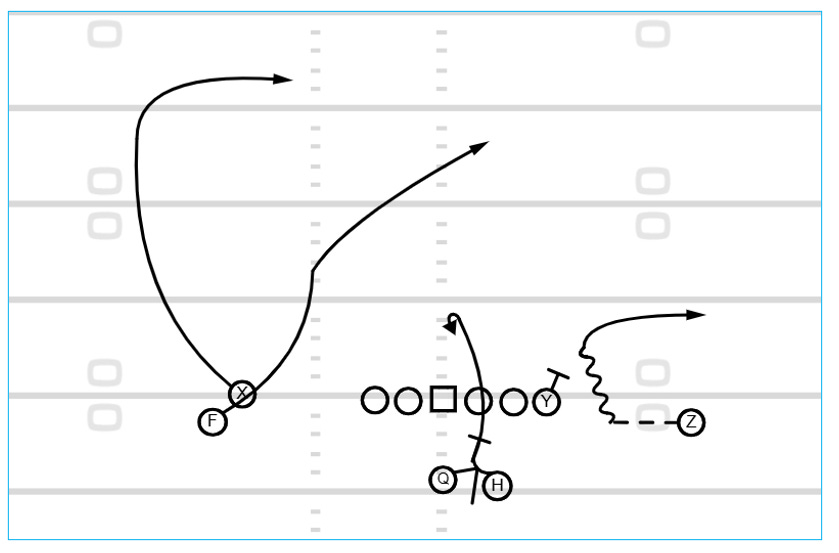
The first read for the QB is the Z receiver on the “Staff” route. Sell the stalk block on the flat defender/down safety, then break out.
If the cornerback comes down to help on the underneath route, the Diagonal (F) will replace him behind the hook players.
If the hook defender recovers, the running back on the check down is the replacement. A clean triangle read.
In the clip below, the Diagonal opens up when the cornerback drives on the Staff route.
In week 6 the Bears call a neat high red zone concept. Similar to our previous play, this one involves a stalk sell from the boundary WR.
The concept belongs in the smash family. It creates a hi-low on the outside with the Stalk-Corner (F) and the running back on the Swing route. The Slants are built in as pressure answers.
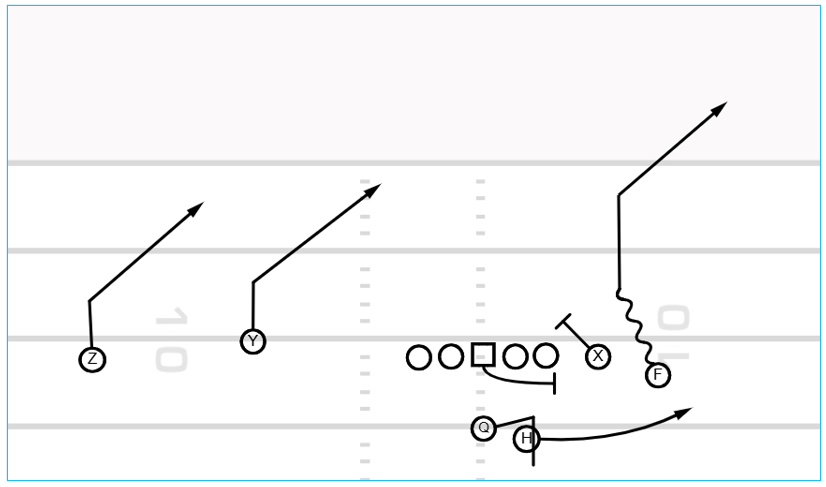
In the clip, Caleb decides pre-snap that he is going to flip the ball out quickly to the inside Slant.
Another high red zone example, and this one is able to connect for a touchdown.
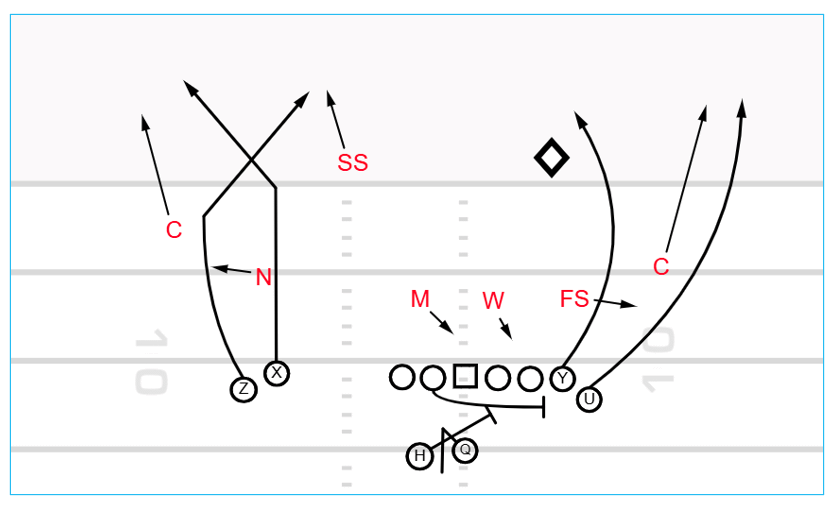
The play design incorporates a 1 hi / 2 hi type of read. Inverted Scissors against two high, with the verticals for single high.
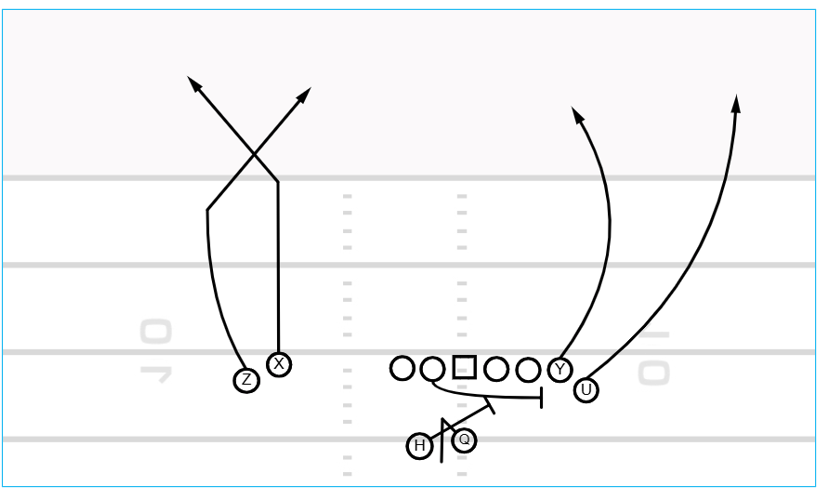
Against two high, the Corner route (X) is taught to grab the near safety to open up the Post coming underneath him.
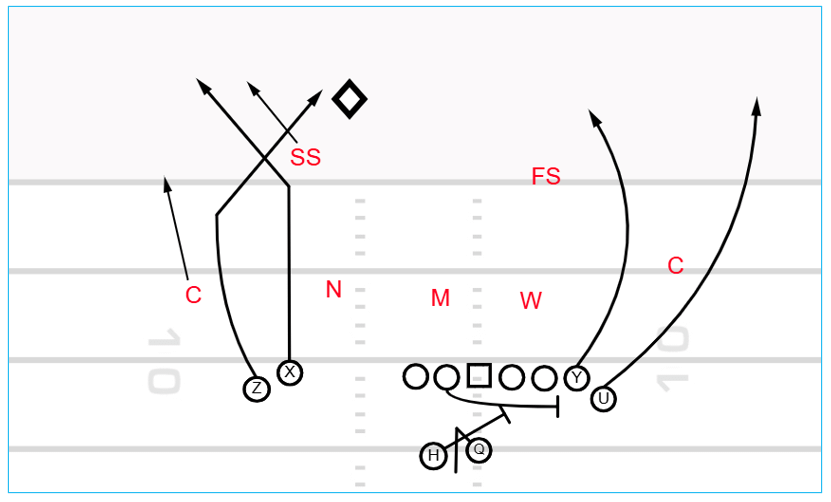
The Cowboys play single high, cheating the middle safety to the two receiver side. This is where the Seam from the Y tight end comes into play. The initial stem from the Y allows him to cross the face of the flat player. The play action holds the hook defenders. The defense busts, as nobody carries the Seam. This doesn’t change how well the play is designed, however.
If you like this breakdown, please consider becoming a paid subscriber with the link below. For only $5/month (or $50 annually), your support allows me to spend more time and resources to scour the X & O landscape.